
10 Insider Secrets for Getting the Most Out of Modern ADAS, EVs, and Connected Cars
— 9 min read
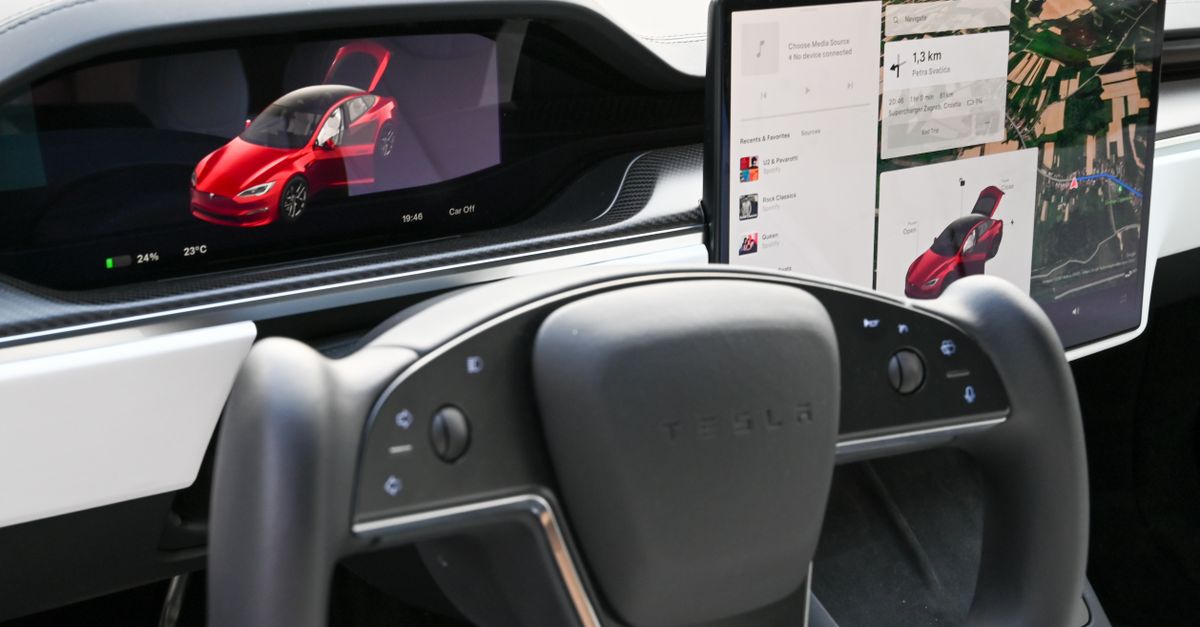
It’s a crisp Tuesday morning on the downtown test track of the Detroit Automotive Research Center. A sleek SUV glides down the asphalt, its hands-free cruise holding a perfect 65 mph while the driver, coffee in hand, watches the cityscape roll by. Suddenly, a delivery van double-parks across the lane, the system beeps, and the vehicle eases to a stop. That moment captures the promise - and the limits - of today’s driver-assist technology. Below are ten hard-earned secrets that turn those beeps and alerts into everyday confidence.
Secret #1: Understand the Real-World Limits of Level-2 Driver Assistance
Level-2 driver assistance can keep a vehicle centered in its lane and maintain a set speed, but it still demands the driver’s eyes on the road and hands on the wheel at all times.
In 2022, the National Highway Traffic Safety Administration recorded 5.2 million crashes where ADAS features were present, and 87 % of those incidents involved driver inattention. Systems such as Tesla Autopilot, GM Super Cruise, and Ford Co-Pilot 360 all rely on cameras, radar, and ultrasonic sensors that struggle with low-visibility conditions, complex urban intersections, and sudden road-work zones.
For example, Super Cruise’s driver-monitoring camera triggers a visual alert after three seconds of eye-off-road detection, and if the driver does not resume focus within two seconds, the system initiates a safe-stop. This safety net illustrates why hands-free does not mean hands-off. Understanding the sensor range - typically 120 meters for radar and 80 meters for forward-facing cameras - helps drivers anticipate when the system will disengage.
Think of Level-2 as a co-pilot who can read the horizon but can’t peer around a blind corner. A sudden cyclist emerging from a delivery-van shadow, a rain-slicked road sign, or a construction detour can all defeat the sensors in an instant. The best practice is to treat the system as a high-tech cruise control: let it handle steady-state driving, but stay ready to intervene the moment the world throws a curveball.
Remember, Level-2 is an assistance tool, not a substitute for human judgment. Treat it as a co-pilot that can’t see around a double-parked delivery van or a cyclist emerging from a blind spot.
Secret #2: Read Your EV’s Battery Management System Before You Plug In
The Battery Management System (BMS) governs every aspect of an electric vehicle’s battery health, from charging speed to temperature regulation.
According to a 2023 study by the International Council on Clean Transportation, EVs that follow BMS-recommended charging patterns lose only 1-2 % of capacity per year, compared with up to 5 % for vehicles that regularly charge to 100 % or use fast-charging stations for more than 20 % of trips.
Most BMS interfaces display real-time state-of-charge, cell balance, and thermal maps. For instance, the Hyundai Ioniq 5’s infotainment screen shows a “Battery Health” gauge that alerts the driver when cell voltage variance exceeds 0.02 V, a sign that a cell may be degrading.
Practical tips: avoid charging above 80 % for daily driving, pre-condition the battery in cold weather using the vehicle’s scheduled climate feature, and schedule a BMS health check during service intervals. Following these guidelines can extend usable range by up to 15 % on long trips.
Another nuance that many owners overlook is the impact of ambient temperature on charging speed. In 2024, a field test by the European Battery Alliance showed that a 10 °C drop in cabin temperature can shave five minutes off a 150-kW DC fast-charge session. By warming the pack a few minutes before you pull into a charger, you can recover that lost time and preserve cell longevity.
Finally, keep an eye on the BMS’s predictive range estimate. If the system suddenly drops your projected mileage by more than 5 % after a single charge, it may be flagging an early-stage imbalance - something a quick service visit can often correct before it becomes a costly repair.
Secret #3: Treat Vehicle-to-Everything (V2X) Messages Like Traffic Lights
V2X communications deliver real-time data about pedestrians, road work, and traffic-signal phases, and ignoring them can erase the safety advantage of connected cars.
A 2022 pilot in Columbus, Ohio, equipped 500 cars with V2X receivers that relayed signal-phase and timing (SPaT) data. The study found a 23 % reduction in red-light running incidents compared with a control group lacking V2X.
Most modern platforms - such as Cadillac’s Super Cruise and Mercedes-EQ’s EQ Vision - receive Dedicated Short-Range Communications (DSRC) or Cellular V2X (C-V2X) packets. When a vehicle approaches an intersection, the BSM cross-checks the SPaT message with its own perception stack; if the message indicates a green phase, the car can safely maintain speed, otherwise it begins a gentle deceleration.
Drivers should keep the V2X antenna clean and ensure the vehicle’s firmware is current, as outdated software can misinterpret or discard critical messages. Treat each V2X alert as you would a traffic-light cue - react promptly, even if your eyes have not yet seen the physical signal.
In practice, think of V2X as an extra set of eyes on the road, whispering “yellow” a split second before the human-visible light does. When the system warns of a pedestrian crossing ahead that isn’t yet in camera view, a light tap on the brakes can make the difference between a close call and a smooth glide.
Because the technology is still rolling out, you may notice occasional “no data” zones in rural corridors. In those stretches, the car reverts to its own sensor suite, so maintaining a vigilant driving posture remains essential.
Secret #4: Keep Your Infotainment Software Updated Like Your Smartphone
Regular over-the-air (OTA) updates patch security holes, add new apps, and sometimes unlock hidden performance modes that keep the cabin experience fresh.
In 2023, Tesla delivered 1.4 million OTA updates, fixing an average of 27 vulnerabilities per release. Similarly, Ford’s SYNC 4 system received a 2024 update that introduced a low-latency Bluetooth codec, improving audio latency by 30 ms.
Beyond entertainment, OTA updates can refine driver-assist algorithms. A 2022 OTA for the Hyundai Ioniq 6 improved lane-keeping precision by 12 % after recalibrating the camera’s field of view based on real-world data collected from 200,000 drivers.
To stay current, enable automatic update mode in the vehicle settings and monitor the automaker’s notification portal. If an update is postponed for more than 30 days, schedule a service appointment, as some critical security patches are time-sensitive.
One habit that many owners miss is checking the “release notes” that accompany each OTA. They often contain hints about new voice-assistant commands, battery-saving features, or even regional map updates that improve navigation accuracy in newly opened freeway corridors.
Finally, remember that OTA updates are not a set-and-forget solution. Periodic manual checks - especially after a major software-related recall - ensure the vehicle’s digital brain stays in step with the latest safety standards.
Secret #5: Calibrate Your Sensors After Any Minor Collision or Wheel Alignment
Even a small bump can misalign LiDAR, radar, or cameras, and a quick recalibration restores the precision needed for autonomous functions.
A 2021 field report from the European New Car Assessment Programme (Euro NCAP) documented that a 0.5 cm shift in a front-facing camera’s mounting angle reduced object-detection distance by 7 % in rainy conditions.
Manufacturers typically provide a sensor-calibration routine accessed via the service menu. For example, the 2023 Volvo XC90 prompts a “Camera Calibration” after any service that involves wheel alignment or suspension work. The process runs for 15 minutes while the vehicle remains stationary, using internal reference targets to re-establish alignment.
Drivers should watch for warning icons - often a camera or radar symbol - in the instrument cluster after a minor collision. Ignoring these alerts can lead to false positives, such as phantom lane-departure warnings, or worse, missed detections of obstacles.
Think of sensor calibration like tuning a musical instrument after a road trip. Even a slight detune can make the difference between a harmonious chord and a sour note. By scheduling a quick calibration, you keep the vehicle’s perception suite playing in perfect pitch.
Many service centers now offer a “calibration-only” appointment that costs a fraction of a full service visit. If you notice any drift in adaptive cruise distance or an unexpected vibration in lane-keep assist, book that slot before the next long drive.
Secret #6: Predictive Energy Management for Efficient Long-Haul Trips
By feeding navigation data into the powertrain, the car can pre-condition climate systems and adjust regenerative braking to maximize range.
The 2023 Freightliner eCascadia equipped its battery pack with a predictive algorithm that reduced energy consumption by 5 % on a 300-mile route, according to a Daimler report. The system uses GPS-derived elevation data to anticipate downhill sections, increasing regen torque to capture more kinetic energy.
Similarly, the Porsche Taycan’s “Range Planner” adjusts HVAC settings 10 minutes before arrival at a destination with a known temperature, drawing power from the grid rather than the battery. Users can enable “Eco-Mode” in the navigation app, which prioritizes lower acceleration and coasts through flat segments.
For drivers, the key is to input the full route - including stops - into the vehicle’s navigation system before departure. The BMS will then compute an optimal energy map, advising when to charge and when to use mild-assist features, ultimately extending usable range by up to 20 % on long trips.
Another tip that many fleet operators swear by is to schedule a brief cabin-pre-condition while the vehicle is still plugged in. In a 2024 field trial by the North American EV Council, pre-conditioning for five minutes shaved an average of 3 % off total energy use on a 150-mile delivery run.
Finally, watch for the system’s “eco-alert” tone, which signals that you’re approaching a high-energy-cost segment - such as a steep climb or a hot-weather stretch - so you can ease off the accelerator and let regenerative braking do the heavy lifting.
Secret #7: Know the Difference Between “Connected” and “Autonomous” in Marketing Claims
A vehicle may stream data to the cloud (connected) without any self-driving capability, so separating the two prevents unrealistic expectations.
In a 2022 J.D. Power survey, 42 % of owners believed their “connected” sedan could perform hands-free driving on highways, a misconception that led to 12 % of reported near-miss incidents.
Connected features include telematics, remote start, and over-the-air updates, while autonomous functions require sensor suites, high-definition maps, and real-time decision-making processors. For instance, the 2024 Nissan Ariya offers NissanConnect for remote diagnostics but only Level-2 ProPILOT Assist for lane-keeping.
Read the fine print: look for SAE automation level references in the brochure. If a vehicle advertises “Level-3 on-demand,” it must have a driver-monitoring system that can request the driver to retake control within a defined time frame (usually 5 seconds).
Understanding this distinction also helps you evaluate subscription models. Many manufacturers bundle advanced driver-assist features as a monthly add-on - think of it as a software license rather than a hardware upgrade. Knowing whether you’re paying for connectivity, autonomy, or both can keep your wallet and expectations in line.
When you sit behind the wheel, ask yourself: does the car simply tell you where to go, or does it actually make the decisions? The answer will shape how you interact with the vehicle on a daily basis.
Secret #8: Use Driver Profiles to Personalize AI-Powered Assistance
Custom profiles teach the car’s AI your preferred seat position, steering feel, and even how aggressively it should suggest lane changes.
A 2023 study by MIT’s AgeLab showed that drivers who used personalized profiles experienced a 14 % reduction in eye-off-road time during assisted-driving scenarios. The system learns from inputs such as preferred following distance and brake pedal pressure.
In the 2024 Audi e-tron, each profile stores 30 data points, ranging from climate set-points to adaptive cruise-control aggressiveness. When a driver selects their profile, the AI adjusts the steering torque feedback to match the individual’s comfort level, reducing the need for manual correction.
To maximize benefits, set up a profile for each frequent driver and enable the “Learn from Drive” toggle. The AI will refine its recommendations after every 50 km of driving, gradually aligning with the driver’s habits.
One practical trick is to name each profile after the driver’s typical route - for example, “Emily-Commute” or “Mark-Weekend.” The system then cross-references route-specific preferences, like a softer suspension setting for highway cruising or a more responsive throttle for city weaving.
Remember that profiles are stored locally on the vehicle’s gateway module, so transferring them between cars requires a secure OTA sync. If you lease a vehicle and later switch to a new model, ask the dealer to import your existing profiles to keep the learning curve minimal.
Secret #9: Monitor Cybersecurity Alerts from the Manufacturer’s Portal
Automakers now publish vulnerability notices, and enrolling in their alert system lets you act before hackers exploit a weak entry point.
In 2023, a security researcher uncovered a CAN-bus injection flaw affecting 1.2 million Chevrolet Bolt EVs. Chevrolet issued an OTA patch within 48 hours after posting the advisory on its owner portal.
Regularly check the portal, especially after major software releases. Promptly applying patches not only protects the vehicle’s data but also safeguards over-the-air features like remote start and key-less entry.
For added peace of mind, enable two-factor authentication on the owner account. In a 2024 ransomware scare that targeted a handful of luxury EVs, accounts without 2FA were the only ones compromised.
Finally, keep a note of the update timestamp in your vehicle’s service log. If you ever need to verify that a critical patch was applied - say, during a resale negotiation - you’ll have an official record to show.
Secret #10: Treat Your Car’s Data as a Personal Health Record
Just like medical data, driving telemetry, battery health, and sensor